Can Facial Wrinkles Be Eliminated with Non-Surgical Face Lift?
Facial wrinkles, one of the most prominent signs of aging, are among the primary aesthetic concerns for many people. Today, it is possible to achieve a youthful and dynamic appearance through methods that do not require surgical intervention. But can non-surgical face lift procedures really eliminate wrinkles?
What is Non-Surgical Face Lift and How Does It Work?
Non-surgical face lift is the general term for minimally invasive procedures applied to tighten and rejuvenate the skin without requiring surgical incisions or general anesthesia. These methods activate the skin’s natural renewal mechanisms, increasing collagen production and supporting tissue regeneration.
The basic working principles of non-surgical lifting procedures are as follows:
Collagen stimulation: Fibroblast cells are stimulated by transferring controlled energy to subcutaneous tissues. These cells produce collagen and elastin proteins, which are responsible for skin firmness and elasticity.
Tissue heating technology: The applied energy heats specific layers of the skin, initiating the cellular renewal process. With the heat effect, old collagen fibers contract while the production of new and healthier collagen is encouraged.
Tissue lifting and restructuring: Some techniques physically lift and support the tissue with absorbable threads or special materials placed under the skin. During this process, the body creates a natural lifting effect by forming a new collagen network around the foreign material.
The greatest advantage of non-surgical methods is the short recovery time and quick return to daily life. Most procedures are completed within 30-90 minutes, and patients can usually resume their normal activities the same day.
Types of Facial Wrinkles and Causes of Formation
To properly treat wrinkles, it is important to first understand their types and causes of formation. Facial wrinkles are basically divided into two categories:
Dynamic wrinkles: These wrinkles, formed by repetitive facial muscle movements, are also known as expression lines. These lines that appear when smiling, frowning, or blinking can become permanent over time. Forehead lines, crow’s feet around the eyes, and lines between the eyebrows fall into this group.
Static wrinkles: These wrinkles, visible even without facial movement, are formed by the skin losing its elasticity and the effect of gravity. Nasolabial folds (lines running from the nose edge to the mouth corner), vertical lines around the lips, and neck wrinkles are in this category.
Main Causes of Wrinkle Formation
Aging process: Collagen and elastin production decreases with age. After age 25, approximately 1% of collagen is lost each year. This situation causes the skin to thin and sag.
Sun damage: UV rays destroy the skin’s structural proteins. This process, called photoaging, is one of the leading causes of premature aging. Wrinkle formation accelerates in skin excessively exposed to the sun.
Lifestyle factors: Smoking reduces the skin’s oxygen intake and prevents collagen production. Alcohol consumption dehydrates the skin, and insufficient sleep negatively affects cell renewal.
Repetitive facial expressions: Facial movements repeated for years create permanent folds under the skin. Natural expressions such as smiling, frowning, and squinting can turn into deep lines over time.
Environmental factors: Air pollution, free radicals, and stress disrupt the skin’s barrier function and contribute to premature aging.
Non-Surgical Face Lift Methods: Which Techniques Are Used?
Modern aesthetic medicine offers various effective techniques for non-surgical face lifting:
Thread lift: Special absorbable or non-absorbable threads are placed under the skin to lift the tissue upward. These threads, made from biocompatible materials such as PDO, PLLA, or PCL, provide mechanical tightening while also stimulating collagen production. The procedure is performed under local anesthesia and shows effects for 6-18 months.
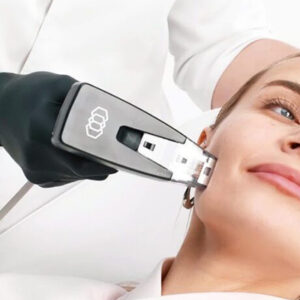
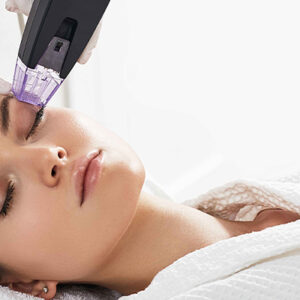
Radiofrequency (RF) applications: Collagen renewal is achieved by heating subcutaneous tissues with radio waves. Monopolar, bipolar, or fractional RF devices can target tissues at different depths. Systems like Thermage and Profound are popular in this category. Slight redness may occur after treatment, but recovery is rapid.
HIFU (High-Intensity Focused Ultrasound): Ultrasound energy reaches the SMAS layer of the skin, affecting the tissues targeted by surgical face lifting in a non-invasive way. Ultherapy is the best-known application of this technology. Significant results can be obtained in a single session, and the effect can last 12-24 months.
Laser treatments: Fractional lasers trigger renewal by creating micro-injuries in the skin. CO2 and Erbium lasers give effective results on deep wrinkles. They are successful in skin tightening and correction of tone irregularities.
Botox and fillers: Botulinum toxin reduces dynamic wrinkles, while hyaluronic acid fillers compensate for volume loss and fill lines. These methods are usually combined with other techniques.
Plasma energy (Plexr): Tissue contraction is achieved by creating small dots on the skin surface with controlled plasma arcs. It is effective in eyelid drooping and jaw area looseness.
PRP (Platelet Rich Plasma): Platelet-rich plasma obtained from the patient’s own blood increases the skin’s renewal capacity. It is usually used as a support for other methods.
Which Wrinkles Can Be Eliminated with Non-Surgical Face Lift?
Non-surgical methods achieve varying levels of success on different wrinkle types:
Mild to moderate depth wrinkles: Lines in this category are the groups that respond best to non-surgical methods. Fine lines around the eyes, horizontal lines on the forehead, and superficial wrinkles in the cheek area can be effectively reduced. Radiofrequency and laser treatments give excellent results in this type of wrinkle treatment.
Nasolabial folds: These lines extending from the nose edge to the mouth corner can be significantly softened with fillers and thread applications. More permanent results are obtained with combined treatments.
Perioral lines: These vertical lines frequently seen in smokers can be corrected with laser treatments and minimal filler applications. Botox application is also effective in reducing wrinkles caused by muscles around the lips.
Neck wrinkles: Mild to moderate neck wrinkles can be improved with HIFU and RF treatments. Thread applications also show tightening effects in the neck area.
Expression lines: Lines between the eyebrows, forehead wrinkles, and crow’s feet at the eye corners are treated quite successfully with Botox applications. Permanent improvement can be achieved with regular repetitions.
Limitations of non-surgical methods:
Very deep and advanced wrinkles: Non-surgical methods remain limited in deep wrinkles accompanied by severe skin sagging. In these cases, surgical face lifting may be more appropriate.
Excessive skin redundancy: In significant skin sagging, especially if there is considerable looseness in the jawline and neck area, non-invasive methods may be insufficient.
Realistic expectations: Although non-surgical methods provide significant improvement, they are not as dramatic as surgical results. It is more realistic to expect natural rejuvenation and refreshment.
How Permanent Are Non-Surgical Face Lift Results?
The permanence of non-surgical face lift procedures varies depending on the technique applied, the patient’s age, skin quality, and lifestyle:
Thread applications: Absorbable threads provide mechanical support for 6-12 months, while non-absorbable threads provide support for 18-24 months. Even after the threads dissolve, the effect continues thanks to the collagen production they stimulated. Results can be extended with annual maintenance sessions.
HIFU treatment: The effects of a single session application can last 12-24 months. Results improve as collagen production increases within the first 2-3 months. The improvement obtained can be maintained with annual repetition.
Radiofrequency applications: The initial effect lasts 3-6 months, results can be maintained for 12-18 months with a 3-4 session treatment program. 1-2 maintenance sessions per year are recommended.
Laser treatments: Fractional laser results show permanence for 12-18 months. Long-term improvement is achieved as the skin renewal process continues. Annual repetition is ideal.
Botox applications: The effect lasts 3-6 months and requires regular repetitions. With long-term regular use, application intervals may lengthen as muscles weaken.
Fillers: Hyaluronic acid fillers last 6-18 months, calcium hydroxyapatite fillers last 12-24 months, and PLLA fillers show permanence for up to 2 years.
Recommendations to extend results:
Regular sunscreen use protects the skin from UV damage
Healthy nutrition and adequate water consumption increase skin quality
Staying away from cigarettes supports collagen production
Quality skin care routine reinforces treatment results
Regular maintenance sessions ensure continuity of results
Stress management and adequate sleep support cell renewal
For Detailed Information and Questions, You Can Reach Us via WhatsApp. You Can Also Follow Us on Our Instagram Address.

 Turkish
 Français
 عربي
عربي